


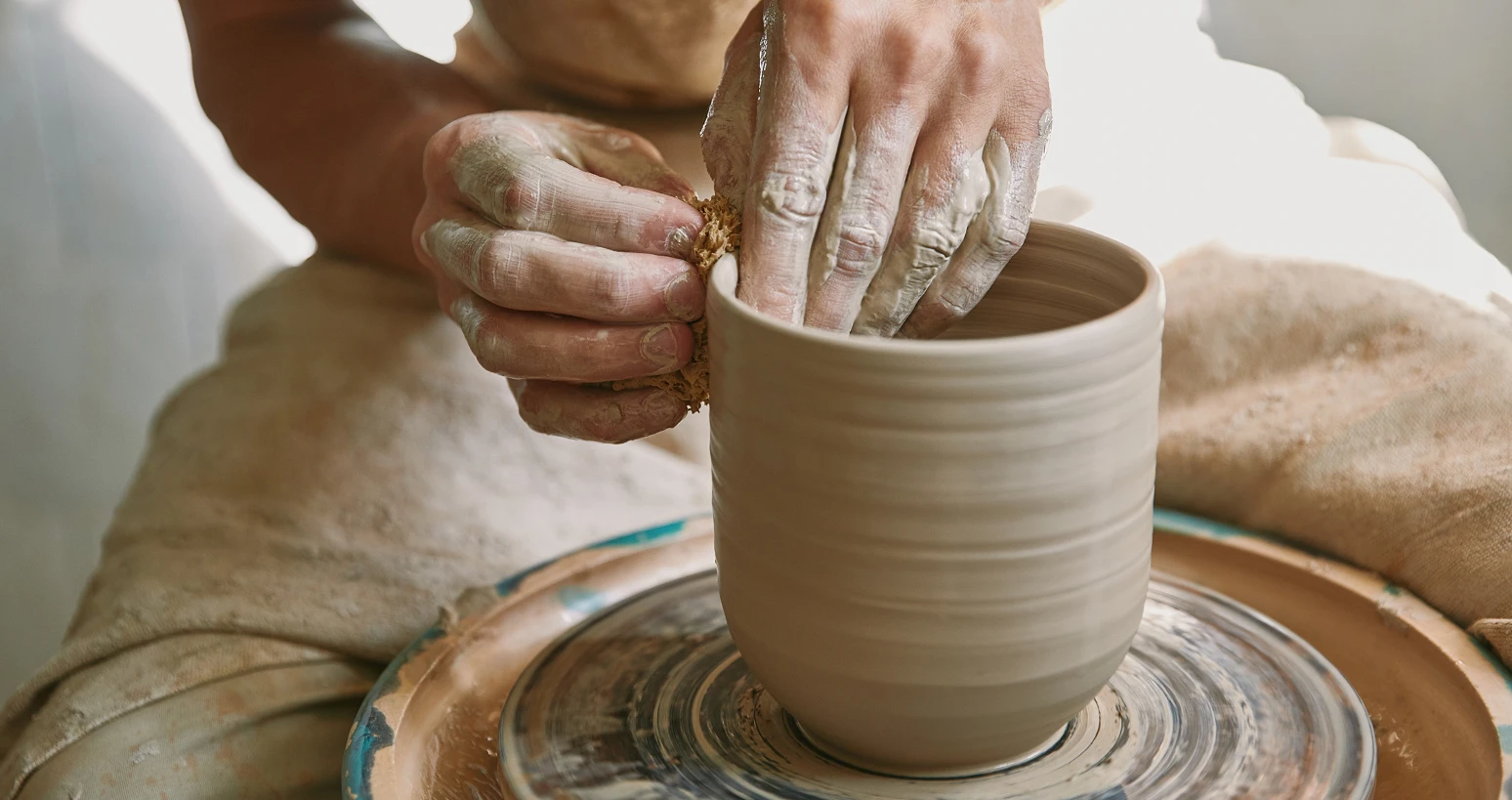

M370 Casting Clay (M370C) does not contain added bentonite, unlike the regular pugged clay. That means it has lower drying shrinkage, which is good news for your molds and your patience. When casting with M370C, the main things to keep in mind are deflocculation, accurate specific gravity measurements, and using a suitable propeller mixer to create a smooth, consistent slip. The recipe below is a reliable starting point, but you may need to make small adjustments to the Darvan No. 7 addition. Slip likes to keep us humble
Suggested recipe — yields approximately 4 litres, or enough slip to feel pleasantly productive:
| Ingredient | Amount |
| M370 Casting | 5,000 g (2 × 2.5 kg bags |
| Water | 2,140 g by weigh |
| Darvan No. 7 | 38 g |
Larger batch recipe — for when 4 litres just will not do
| Ingredient | Amount |
| M370 Casting | 20 kg bag (44 lb) |
| Water | 8.4 kg by weight (8.4 L |
| Darvan No. 7 | 152 g |
Steps in order — because slip is much more cooperative when we do things in the right order:
- Weigh the water, dry powder, and Darvan No. 7. Reserve approximately 10–15% of the Darvan No. 7 in a separate container for final adjustments. Think of it as your little
emergency bottle of slip persuasion. - Add the measured water to a clean bucket. Clean is the key word here; mystery crumbs are not part of the recipe.
- Add the initial deflocculant by pouring the main portion of the Darvan No. 7 directly into the water, then stir briefly.
- Begin mixing, then slowly add the dry powder into the moving vortex to ensure even dispersion. Slow and steady wins the slip race.
- Adjust fluidity as needed. Measure specific gravity by comparing the weight of the slip to the weight of an equal volume of water. Measure after approximately one hour of mixing and re-check the following day. A specific gravity of 1.77 is recommended for slip casting. If the slip is too thick, add a small amount of the reserved Darvan No. 7. Add gradually; Darvan is powerful, and it knows it.
- To test specific gravity, place a clear container on a scale and tare it. Add 100 ml of water and mark the level on the outside of the container. If using a container with measurement
marks, verify its accuracy by weighing 100 ml of water and checking whether the 100 ml mark equals 100ml of water. If not, mark the correct spot. Pour out the water, then add slip
to the 100 ml mark. Divide the slip weight by 100 to calculate specific gravity; for example, 177 g divided by 100 equals 1.77. Congratulations: you have done clay math, you totally got this
If the specific gravity is above target, for example 1.9, add water gradually. If it is below target, for example 1.4, add dry material and record the adjustment so the water addition can be reduced in the next batch. Re-check the specific gravity after the slip has rested and fully homogenized. We recommend allowing the slip a full day to settle in, think about its choices, and become more consistent before retesting viscosity and specific gravity the next day.
